Covenant and Calling: a review (part i)
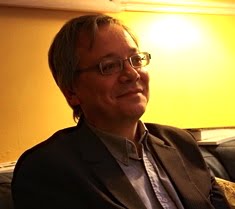
 Robert Vocal'sCovenant and Calling: towards a theology of same-sex relationships is a volume I have wanted to be persuaded by more than anything else I take recently read, for two main reasons. Showtime, I was privileged to be in a small-scale discussion group with Robert at a recent CEEC consultation on the issue of aforementioned-sex unions, and plant him to be a fascinating, warm and engaging person with whom I had much in common theologically. Secondly, this is, in parts, a quite beautifully written book. At just over 100 pages, it is not long, and some of the argumentation is quite dense; yet at points its joint of the meaning of matrimony is zip short of exquisite. John Barclay describes information technology as 'provocate, beautifully argued' and Sam Wells calls it 'reverent, responsible and seriously thoughtful.' And yet, similar many beautiful things, it is (I concluded) deeply flawed in the shape of its argument, and as a result I suspect it will achieve the contrary of what it sets out to exercise.
The Preface, where Song sets out both his arroyo and its context, is in some means the most important part of the book. He quite rightly does not 'want to ask so much about sexuality as about the relationships in which sexuality is expressed', this includes not merely 'Christian understandings of matrimony and celibacy also what these tell u.s.a. about our created, bodily natures and our hope in Christ' (p nine). Following Augustine and others, he is quite clear that both sides of the debate have not sufficiently recognised 'the significance of the advent of Christ for sexuality. Sex BC is not the same as sex activity Advert' (p 10). His central question, and so, is about the issue of 'partially realised eschatology', living in the 'now and non yet' of the coming kingdom, whether this allows for a third style of relating between celibacy and marriage, and (crucially) he asks 'Could such a relationship could be sexually expressed?' As I read through, I wanted to encounter whether Vocal answered that question convincingly.
He is quite clear that he is not taking an approach that is 'programmatically "liberal"', and as sit-in of this he decisively rejects what I think are the iii main approaches to the question from the 'revisionist' side. Commencement, he does not contend for a ' principled methodological privileging of experience over Scripture, tradition or reason.' In particular, this makes him wary of adopting besides easily the linguistic communication of contemporary culture, and he rejects the utilize of 'rights' equally the 'primary moral language' of Christian upstanding debate. Secondly, he rejects an arroyo driven by a missional calendar or the need to make the church connect with culture.
This is a time for discernment, and not for panic. The fashion in which contemporary Western cultures think about and perform sexuality has itself get far too distorted for us blithely to presume that only signing up and joining in could clear upwardly the churches' remaining problems. Sexuality pursued in a consumerist mode, which all too easily becomes sexuality that is pornographic, predatory or promiscuous, is not the finest basis from which to launch a defence of Western values. (p xiv)
The tertiary approach Song rejects—and I think the most significant—is one that 'seeks to play down the created nature of bodies and bodily deviation, and as a consequence…arguably run the danger of existence incipiently 'docetic' in nature.' Here Song has put his finger on a crucial issue in the debate, but ane which is not oft addressed. A Christian sexual ethic cannot exist one in which 'i'southward sex is immaterial'.
An emphasis on relationality which sees 1's sexual activity every bit indifferent disregards the sexed nature of bodies that is in some sense given with creation— even if, as we shall come across, the precise nature of this needs to be carefully thought through (p 16).
In proverb this, I think Song rules out nearly of the pop approaches to the biblical texts (such every bit James Brownson's) found in the 'revisionist' instance. 'Eschatology may be the fulfilment of creation, but it is not its denial.'
If the Preface is the nearly of import part of the book, then chapter ane on 'The Showtime and End of Marriage' is the most fascinating. Song offers a careful reading of the Genesis business relationship and their significance in the light of reflections from the fathers, and weaves into this the bear on of Jesus' celibacy and teaching on eschatology. In many ways he gives usa a disarming and nuanced understanding of the two creation accounts, and observes that 'God declares that they are made male and female, with an intrinsic mutual relationally.' But he then makes what I think is the get-go misstep—and one that is crucial to his later on argument. In Genesis one, sexual differentiation is linked with the chore of ruling over creation (every bit God's vice-regents) and this is effective through procreation, which is therefore a primary purpose of marriage. Song fails hither to give sufficient attention to the 2d creation account, in Genesis 2, where procreation appears not to exist in view at all, only the existential recognition and zipper which is (in the narrative) a solution to the trouble of aloneness.
A brief tour of patristic exploration (including Augustine'south suspicion of sexual activity every bit the place where homo rationality fails, which is a Bad Thing) leads Vocal to identify the 'goods' of marriage as faithfulness, permanence and procreation. At that place is some parallel hither with Jeffrey John's formula of 'permanent, faithful and stable', and it is non hard to run across the direction this might then lead when (either because of the coming kingdom, or the advent of nascence control) procreation becomes less important. What appears to be completely missing from Vocal's discussion here is the notion ofunion, expressed in Gen 2.24 in the linguistic communication of 'cleaving' or unity, and the very strong 'condign one flesh'—language that both Jesus (Mark 10.8) and Paul (one Cor 6.sixteen) redeploy.
The adjacent section is a fascinating exploration of the office of marriage as an analogy for the human relationship of God with creation—and here Song makes a much stronger case than I had expected, one that is usually seen as the province of the well-nigh theologically bourgeois. Hither he rejects any pragmatic or situational understanding of matrimony:
Information technology is one thing to say that I pledge my troth as long as it suits our well-being, and that of our children and a wider social club, another to say that I pledge my troth because that is what spousal relationship is (p 12).
 So follows a detailed exploration of the impact of eschatology on this whole understanding. If the gendered nature of humanity and the function of marriage is connected to procreation, and this is the style that dominion is exercised,and this is vital because people die, so in the new age where there is no decease, there is no need for procreation and therefore no need for union. This is, of course, the essential logic backside Jesus' response to the Sadducees in Matt 22.30, and leads to the logic of celibacy. 'Celibacy, in other words, has become an appropriate stance for those who wish to alive in the New Historic period.' It is not surprising, so, that Jesus and Paul alive out merely this vocation—and it is vital that we recover this perspective, without giving up on wedlock.
If nosotros in the contemporary Church take a need now, one might say that it is to recover the significance of authentic celibacy. Against the heritage of Protestant ethics of the family, against post- and sub-Freudian assumptions about the necessity of a healthy sexual practice life for psychological wholeness, confronting the late modern capitalist consumerisation of sexuality, a renewed understanding of the theological significance of celibacy and avowed singleness is surely essential to the Church's truthful witness (p 22).
Thus far, thus 'traditionalist'—though of grade Song is here challenging 'traditionalist' discourse about union and sexuality as much as anything, and at the aforementioned fourth dimension offering fascinating reflections and insights. Just in doing and then he has set the bar very loftier for the acceptance of aforementioned-sex activity matrimony—or mayhap, to borrow a different image, he has described a very fine heart in the spousal relationship needle through which the camel of same-sex unions must pass if he is to answer his earlier question.
I will explore how he approaches this, and whether he succeeds, in the next post which tin can be found hither.
Much of my work is done on a freelance footing. If yous have valued this mail service, would you considerdonating £1.twenty a month to support the production of this weblog?
If you enjoyed this, do share it on social media (Facebook or Twitter) using the buttons on the left. Follow me on Twitter @psephizo. Like my page on Facebook.
Much of my work is done on a freelance footing. If you have valued this postal service, you can brand a single or echo donation through PayPal:
Comments policy: Expert comments that appoint with the content of the post, and share in respectful argue, can add real value. Seek start to empathise, and then to be understood. Make the most charitable construal of the views of others and seek to learn from their perspectives. Don't view fence every bit a conflict to win; address the argument rather than tackling the person.
Source: https://www.psephizo.com/sexuality-2/covenant-and-calling-a-review-part-i/
0 Response to "Covenant and Calling: a review (part i)"
Enregistrer un commentaire